Two U.S. citizens were shot and killed by Immigration and Customs Enforcement (ICE) agents, both in Minneapolis, in the first month of 2026.
These killings have been followed by the Trump administration’s members claiming instances of self-defense, clearly contrary to video evidence and further demonstrating tendencies of authoritarianism and ruthlessness.
The constant flow of news regarding ICE’s imposition across the Pittsburgh region has only furthered. Due to these developments, we have experienced increased feelings of fear, panic and powerlessness as both students and news consumers.
However, amid rising emotion, it is essential to understand that there is no option other than facing our current reality. It is essential to use the power of our existence as students, workers and community members by shifting our focus to the active defense of our neighbors, especially those of immigrant identity.
The time for activism strictly through the means of “know your rights” campaigns has passed. The federal government and its enforcers have increasingly demonstrated their disregard for the legal formalities of liberal-democratic governance and the rights supposedly afforded to its citizens within that tradition.
Tangible, rapidly increasing action from ICE requires tangible, rapidly increasing action from people in opposition. Showing up to protests, connecting people to support networks and learning safe ICE response plans all qualify as active defense and are ways that people can be a positive force in their communities in a time of fear and uncertainty.
No fight for justice has been won in silence, and no movement has prevailed in comfortability. Historic struggles for labor rights like the eight-hour workday were won in large part due to the on the-ground activism and struggle of everyday people. Throughout human history, people have put their lives on the line to fight for the interests of their communities, and have proven that struggle is the primary force of social change.
Educational initiatives on topics such as protest safety, cybersecurity, historical protest movements and the material basis for the increasing trend toward fascism in the U.S. should be carried out and attended within our campuses, workplaces and neighborhoods to foster knowledge and unity as tools to more effectively defend our most vulnerable.
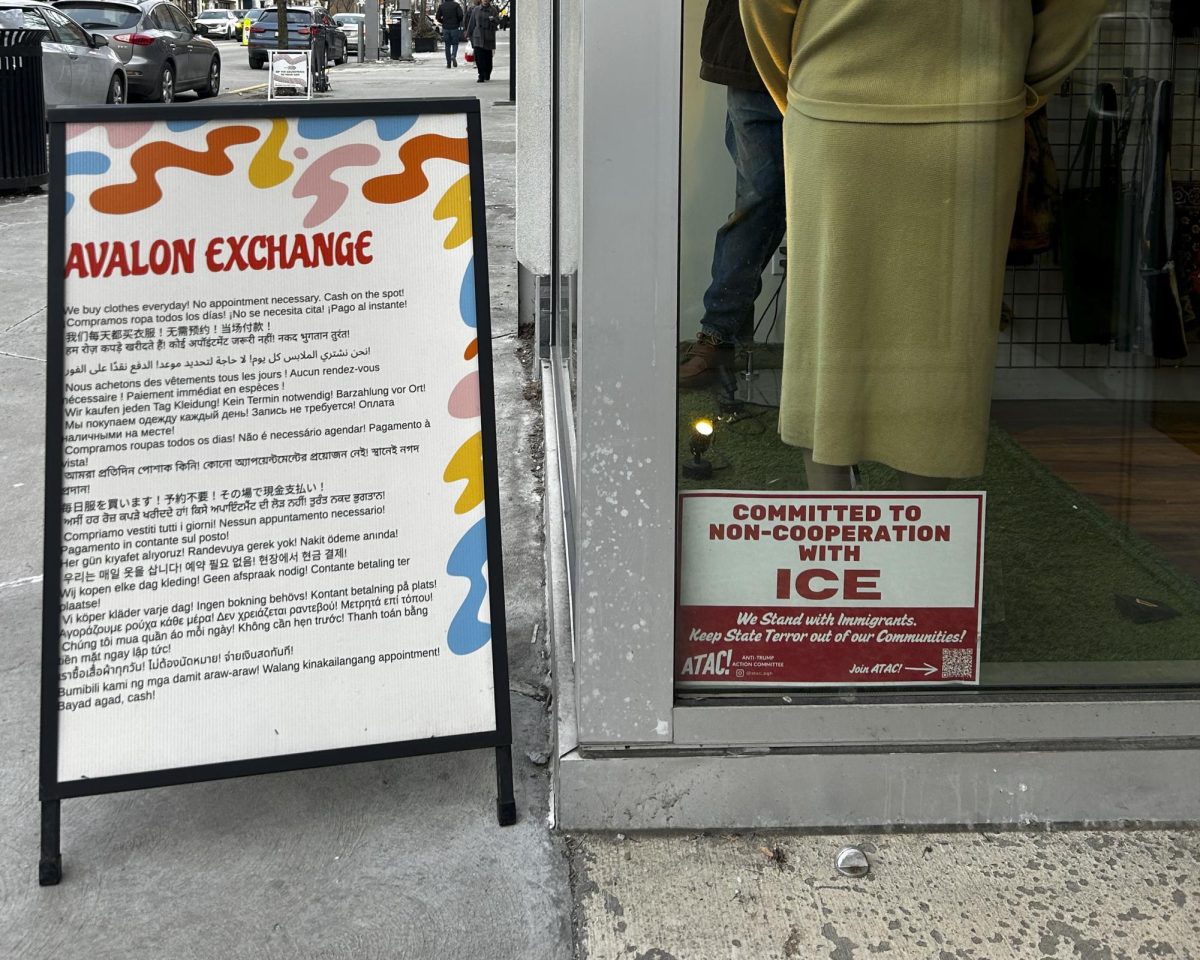
Existing immigrant support networks and their resources should be promoted and expanded. Groups like Casa San José have been consistent advocates and educators for the rights of Pittsburgh’s Latino community and have developed a network to track the presence of ICE agents in Pittsburgh.
Student organizations such as Chatham Students for Global Liberation (CSGL) have already done work in laying the foundations for these initiatives by holding activism events, promoting fundraisers and educating the student body on issues of social justice. Weekly CSGL meetings are held at 7 p.m. Thursdays in Eddy Theatre, and future events will be promoted on its Instagram account @cu_global_liberation. Additionally, Chatham’s Strategic Response Team (SRT) continues to update the campus community regarding the University’s policies and strategies toward potential ICE presence.
Repression committed by ICE and the federal government may provoke feelings of hopelessness, fear and anger, but we must channel these emotions toward uplifting community and resisting oppression. Relegation into complicity, apathy and misdirection are direct opponents to political justice, which will lead to an outcome that directly supports a future ruled by ruthless, violent forces.