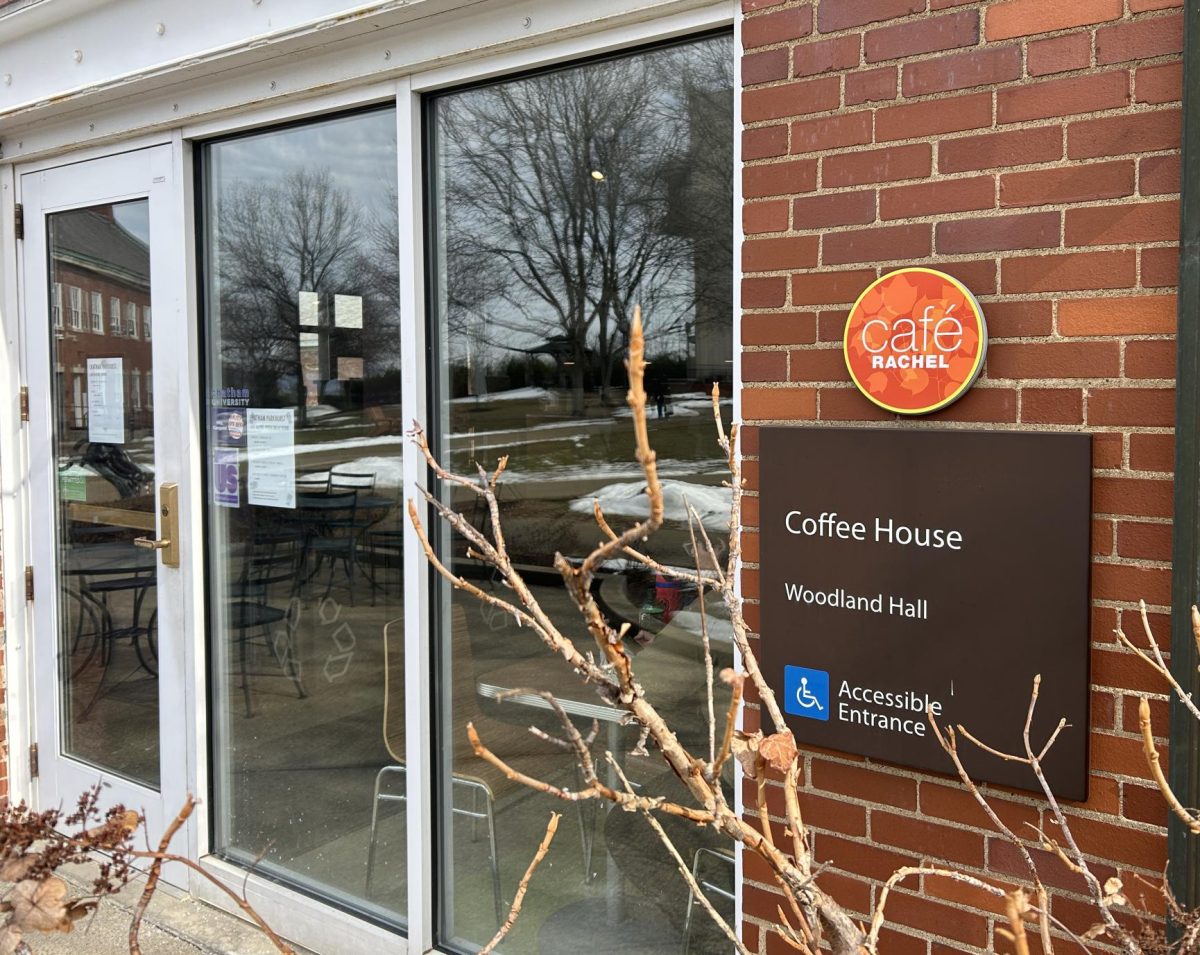
I began my time at Chatham University during the fall 2023 semester, and I’ve lived off campus and attended as a commuter ever since. Because of this, I’ve been removed from many of the debates that circulate campus life.
However, there’s one issue my status as a commuter has resulted in my intimate familiarity with: the daily highway robbery at Café Rachel. That is to say, our on-campus convenience store lacks any real convenience, boasting highly inflated prices. I raise this issue above others I’ve heard discussed at length because it extends far beyond personal annoyance. I wince every time I’m forced to fork over nearly $20 for a small assortment of snacks – hardly enough to qualify as a proper meal. Some days, I work a full shift before class, and prioritizing getting to campus on time doesn’t allow for a break to stop for food.
Yet for some students, the consequences of Café Rachel’s pricing extend far beyond a minor obstacle. On a near-weekly basis, I encounter conversations surrounding allegations of theft at the café – whether through personal admissions, YikYak posts or secondhand accounts of similar incidents – because of its high prices.
I remember one social media post that sparked debate among students over whether stealing from Café Rachel could be considered ethically wrong or morally just. I urge us to move past this ignorance about why students may feel compelled to steal food – if that is indeed happening on campus – and recognize a collective failure to understand that theft is almost always an accessibility issue.
According to the Government Accountability Office’s 2020 data analysis, an estimated 23% of college students (3.8 million) experience food insecurity. Meal plans help alleviate some of this pressure, and certain items at the café may be more accessible for students who have them. Still, tight schedules sometimes make trips to the dining hall unrealistic, pushing students toward quicker, pricier items available at the café. Many students are left choosing between overpaying, going without food or considering theft out of necessity.
Café Rachel is able to thrive off of students’ need for food in a close proximity, giving it control that diminishes any threat of competition from other businesses. So, many students are left choosing between overpaying, going without food or settling for the lessfavorable third option – possibly turning to theft out of necessity.
The closest convenience-style store off campus is CVS at 5600 Wilkins Ave., in Squirrel Hill – a doable walk in warmer months, but hardly practical during harsh winters, especially between classes. This forces a continued reliance on Café Rachel, locking students into a monopolistic cycle.
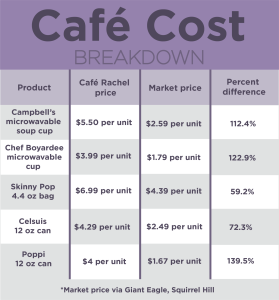
Over-pricing can partially be explained by higher operational costs, since small stores don’t have the capacity to buy in bulk like larger chains. However, this cannot account for the extreme price hiking, with some items being sold for more than 100% above standard market value, indicated by the graphic. It’s a breach of principle and entirely unjustifiable.
It’s frustrating to realize that, beyond the tuition increases I’ve experienced each year I’ve been a Chatham student, we can’t even purchase a cup of soup without being exploited for all that we’re worth. As individuals who cannot dedicate the majority of our time to earning money, why should we accept that an average day on our campus forces us to worry about how to feed ourselves?
Café Rachel has no incentive to lower its prices outside of student (and faculty and staff) interest, which thus far has not proven itself to be of much leverage. So to really initiate some form of change, our community needs to collectively realize that every price-gouged purchase is a catalyst within a system designed to profit from our lack of choices. Only then can we explore alternative options – such as the initiation of a campus community-driven food bank where you take what you need or leave whatever you can.
Chatham has taken steps to address student hunger. Initiatives such as the free Fresh Market Produce distributions on campus and the support available at Student Health Services offer meaningful aid, and communications from the Office of Student Affairs regularly share resources for students in need. These efforts matter, and they do make a difference.
But the fact that students depend on these resources points to persistent gaps in accessibility and affordability on campus. We can either choose to be oblivious as to why students resort to drastic measures to sustain themselves, or we can be part of a solution.