

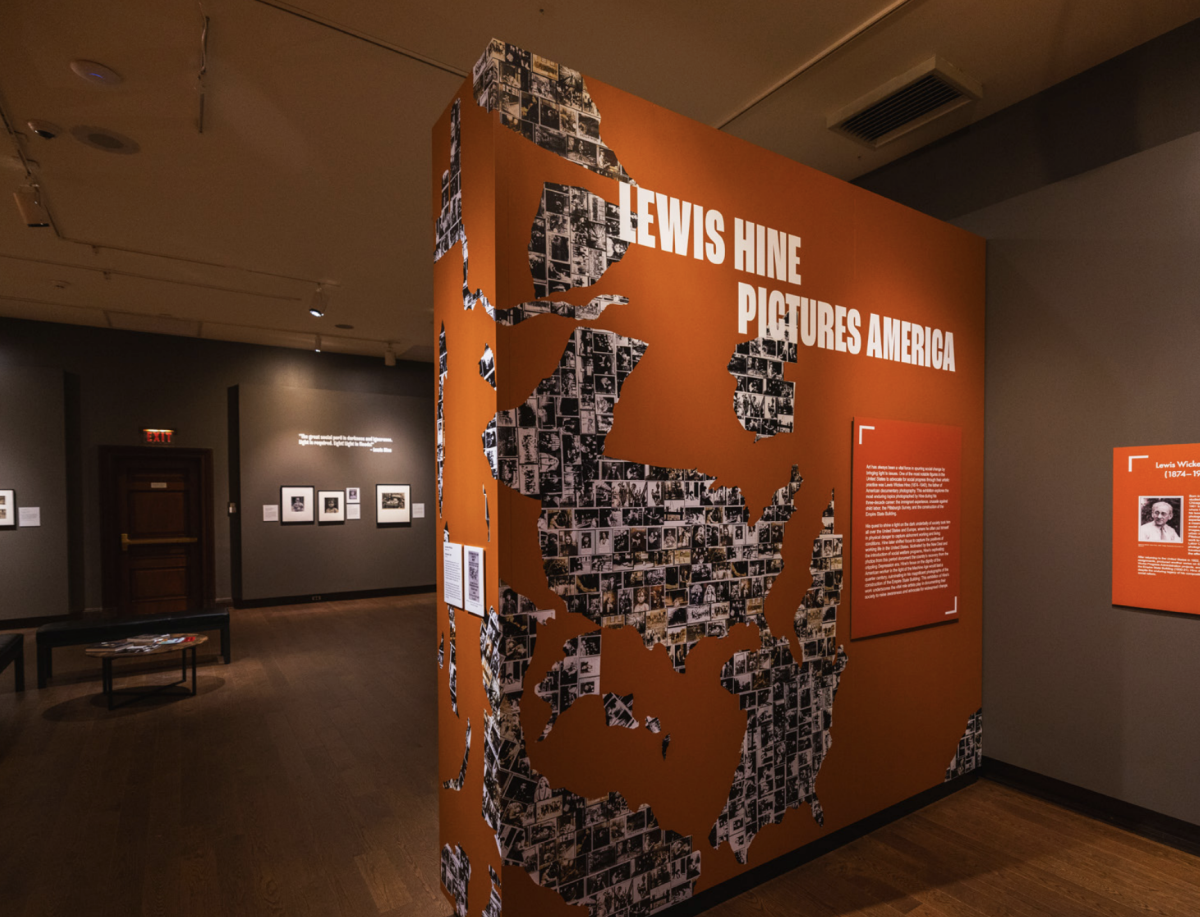
The “father of documentary photography,” Lewis Hine’s remarkable work has come to grace the walls of The Frick Pittsburgh, reminding audiences of the impact and power of photography as an instrument of change.
Located in Point Breeze – less than 2 miles from Chatham University’s Shadyside and East Side locations – the exhibition is on display at The Frick Pittsburgh through May 17. It features more than 70 vintage photographs from Michael Mattis and Judith Hochberg’s private collection and includes some of Hine’s most rare, famous pictures. With work spanning from 1905 to 1935, the exhibition is organized into seven sections – Ellis Island; Picturing Class; Crusading against Child Labor; Steel & Smoke; Men, Women & Machines; Women’s Work and Constructing a Landmark: The Empire State Building.
“I just felt so compelled when I saw these images to really think about reworking it for our audience,” said Assistant Curator Lauryn Smith who was given the opportunity to be the lead content expert on the exhibition. “Thinking about the themes of … right now, immigration, women’s work, that invisible labor that comes up in a lot of conversations about gender today … they had a lot of similar anxieties as a society.”
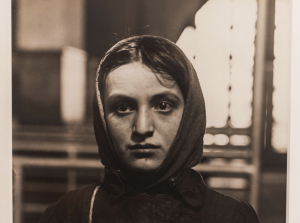
Information about Hine himself – who began using photography as a teaching tool in 1901 at the Ethical Culture School in New York – is also showcased. Just a few years into his teachings, Hine was taking photos of immigrants and people in working-class communities experiencing exploitation and poverty, using these images to study and represent the harsh social conditions they faced.
Early on in his career, Hine used “photography as a teaching tool” at Ellis Island, Smith said. “From there, he does the Pittsburgh Survey [a groundbreaking 1907 sociological study of Pittsburgh]. … It plays such a big role in how he transitions into doing this on his own.”
Famously, Hine went on to document child labor for the National Committee (NCLC), which aided in its efforts to lobby against the practice by providing undeniable evidence of the exploitation of child laborers.
“Lewis Hine Pictures America” was a team effort many years in the making, led by Dawn Brean, Chief Curator and Director of Collections, and collaborated with guest artist and wall designer for the exhibit Quaishawn Whitlock.
Smith said the exhibition emphasizes belonging and solidarity, and she hopes visitors of all backgrounds can find a connection to the art – even if Hine himself wouldn’t have described himself as an artist.
“It’s about conversing and connecting with the community,” she said. “Museums are such a place to have these discussions and come together.”
More information about “Lewis Hine Pictures America” and other exhibits at The Frick – along with upcoming events and ticket pricing – can be found at thefrickpittsburgh.org.
Students can also purchase discounted tickets with their student ID. The Frick provides numerous other benefits for students, and participates in RAD Pass, a program that provides free/discounted tickets for library card holders.