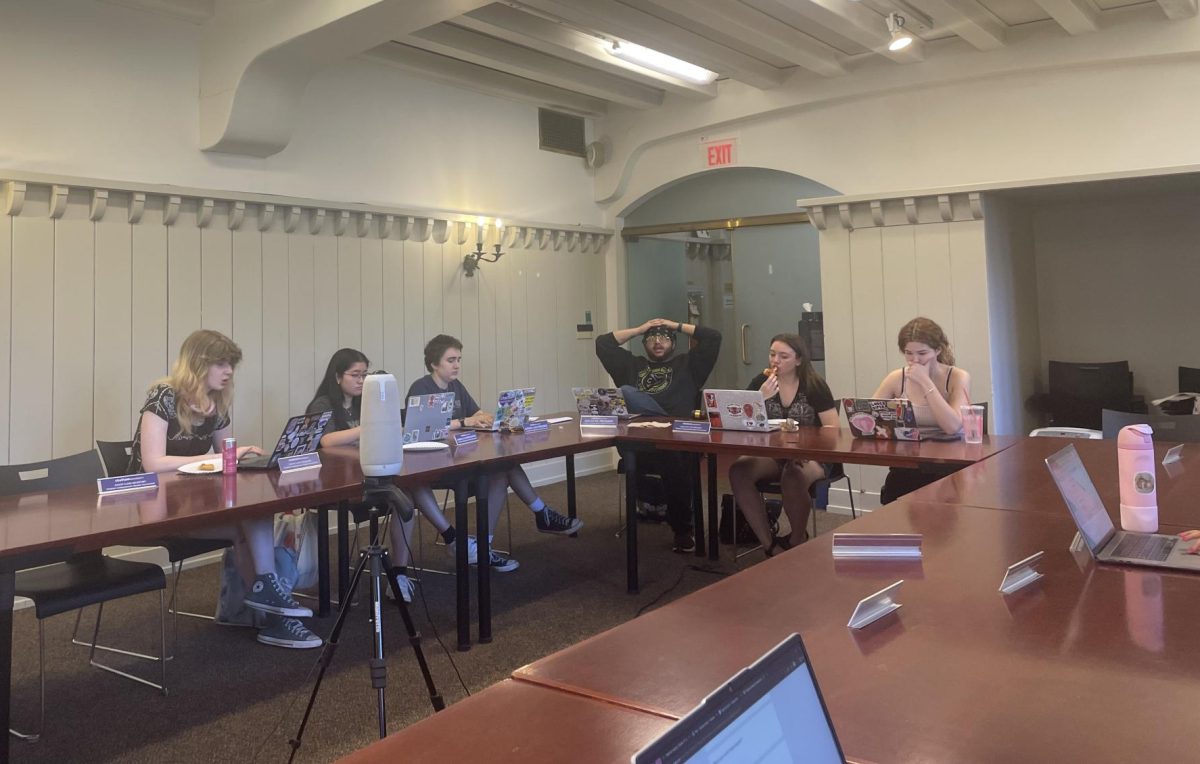
The Undergraduate Budget Committee (UBC) represents an important and useful resource for building and maintaining student organizations at Chatham University, but it deals with some challenges that it hopes to overcome, according to some student organization leaders and a UBC representative.
Some students’ concerns about the UBC process include confusing meeting times, excessive paperwork and unclear budgets. UBC serves as the arm of Chatham Student Government (CSG) responsible for its budget proposals, but it also provides funding for student organizations as a part of event applications. UBC works with Student Engagement and Leadership (SEAL) to create a workable environment for student life.
Student organizations can request funding for an event by submitting and presenting a request during a UBC meeting four weeks in advance of the planned event date. CSG’s executive vice president of finances serves as the chair of UBC, a position currently held by Olivia Harris ‘26.
Harris, who has been UBC chair since August 2025, wants to emphasize UBC as a student-minded body that contributes to a healthy culture for student organizations.
“I believe the voting members [of UBC] have the best interest of the student body in mind,” Harris said. “I believe we all collectively share the value of student engagement at Chatham. We want to see students enjoying these events. We also want organizations to receive funding.”
Olympia Giannakopoulos ‘27, the president of Planned Parenthood Generation Action at Chatham (PPGEN) since 2024, thinks UBC is more reliable than it has been in previous semesters but still has some issues that can make it difficult to work with.
“I never am quite clear what the budget is, so I am never quite sure what I can ask for and what may be denied,” Giannakopoulos said. “The meetings themselves, when your budget is accepted, are a little chaotic because sometimes the [Microsoft] Teams shuts down or you can’t get in on time. It’s a very strict time that you have.”
For the positive aspects of working with UBC, Giannakopoulos emphasized its promptness at addressing issues.
“[UBC is] very to the point and I appreciate that if there ever is an issue, they’re very clear with what the issue is and how it can be fixed,” she said. “They’ve definitely gotten better at that this semester, in my opinion.”
Olivia Martin ‘26, co-president of the Chatham Coffeehouse Committee, noted that the complex process of requesting materials sometimes discourages her from utilizing UBC at all.
“UBC funding is a big process, so if we need paint brushes, we’re just gonna go buy paint brushes with our money, which is maybe not ideal, but to go through the whole UBC funding thing to buy a $6 pack of Dollar Tree paint brushes. It doesn’t make sense logistically,” Martin said.
Harris expressed interest in cutting down on red tape in UBC funding requests.
“My end goal this year is to try to eliminate some of the quote-unquote sludge like unnecessary paperwork or additional tasks in planning events because I want students to be successful, and I don’t want event planning to feel strenuous or overly challenging when maybe it doesn’t need to be,” Harris said.
She also expressed a willingness to listen to student feedback on current UBC rules and guidelines to find ways to better suit the needs of student organizations.
“Making change for the future is something I would be interested in, and part of that for me is having a town hall with clubs and organizations and talking about what they would like to see in a more streamlined process,” she said.
For more information about UBC, including meeting dates and methods of order, it can be found on its section of the CSG website at chathamstudentgovernment.com/ubc.
For student organizations looking to plan an event, the event request form, which includes the application for UBC funding, can be found by clicking here.