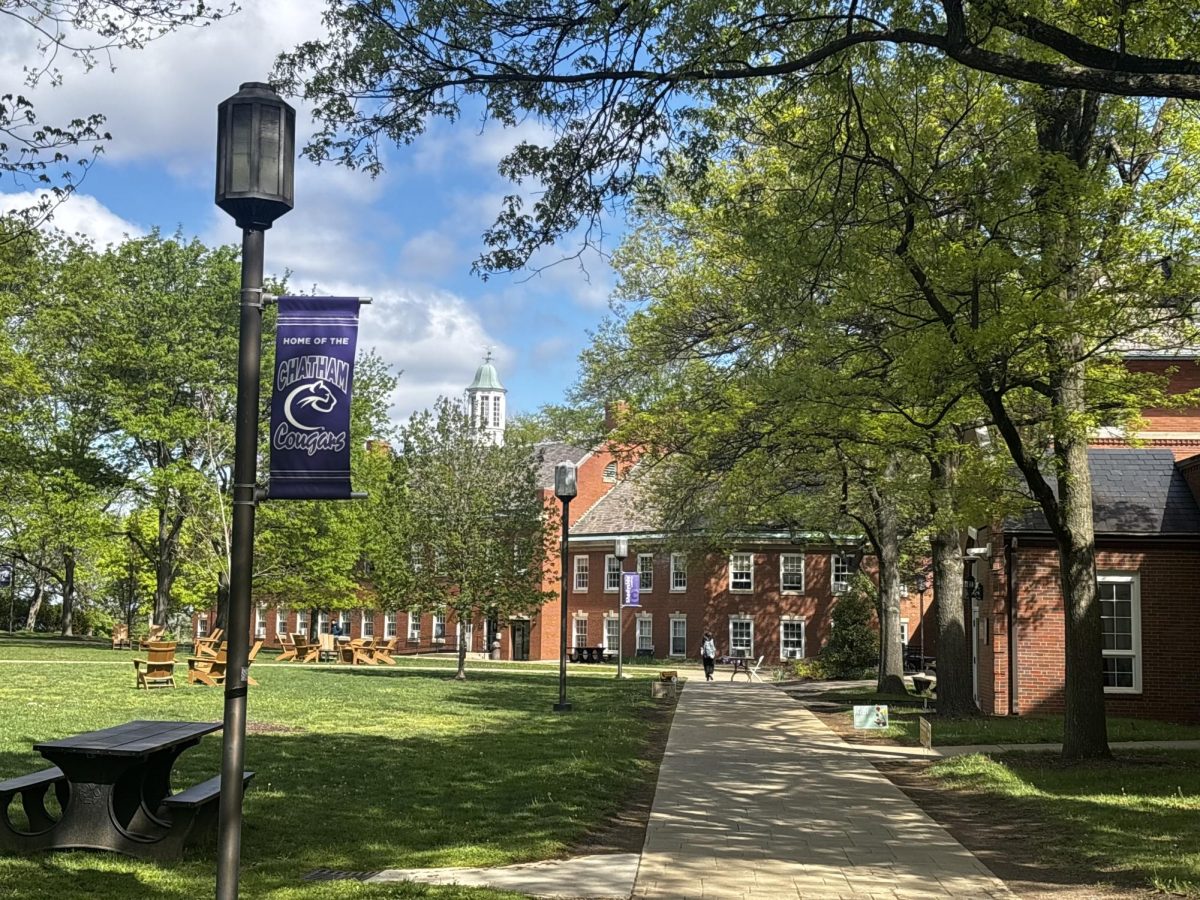
The Chatham University faculty have voted on and approved the structure and operations of the faculty senate, as plans continue forward. The Board of Trustees will meet in June to discuss and vote on the proposed language for the Chatham faculty manual regarding the senate.
The model that has been approved by the faculty is a representative democracy. There will be three elected members from each of Chatham’s three colleges. Eventually, each elected member will have a three-year term. For this first election cycle, some members will opt to run for a shorter term to ensure all members don’t finish their terms at once. To run for election to the senate, the faculty member must be full-time. Elections are planned to take place in April, and the hope is to have faculty seated on the senate by early May.
Once elections are finalized, the senate can then start devising the agenda for the next academic year. However, this timeline continuing forward is dependent on the Board’s vote.
“The language [in the faculty manual] has to be approved by the Board of Trustees. So that’s the last hurdle from a procedural standpoint, but we’re pretty confident that it will be,” Social Sciences Department Chair and Chair of the Shared Governance Committee David Rossbach said.
The main goal of the faculty senate is to give faculty more of a voice in University affairs and policies. The hope is that with the creation of the senate, the Board will be more open and transparent with faculty in the decision-making process.
“We have had a lot of barriers historically between the faculty and the Board of Trustees themselves,” Rossbach said.
The senate comes from the concept of shared governance in higher education, in which authority is distributed between faculty governing boards and the administration. Typically, faculty focus on the curriculum and academic standards, and administration handles institutional decisions.
“There are three identified stakeholders in the University endeavor, that being administration, faculty and students. They should play a role in the decision-making process at a university,” Rossbach said.
The faculty senate aims to benefit faculty, but hopes to assist students, as well. Because of the close relationships between professors and students at Chatham, the senate will aim to provide a place for faculty to bring up concerns brought to their attention by students.
“Decision-making is always enhanced when there are more people involved in that process, particularly more people involved at the ground level and who know the realities of the situation,” Rossbach said.
The creation of the faculty senate comes after the unionization efforts of the Chatham faculty, starting in the fall of 2023. The efforts have been on hold since the 2024 presidential election over concerns about the less labor-friendly federal government. Chatham Faculty United then withdrew its petition for union recognition, ending the 10 months of National Labor Relations Board (NLRB) hearings between the union and the University.
There are mixed feelings from faculty on whether the senate will deliver the change they hope to see. Some faculty feel that gaining representation through unionization would be better because it is legally binding through a contract.
“A senate doesn’t bargain, and a senate doesn’t have access to financial information, but a union could. A union does bargain. A union can also have access to financial documents,” Ryan D’Souza, an assistant professor in the College of Arts and Sciences, said.
Erin Williams-Hatala, the program coordinator for the biological sciences and an associate professor of biology, has similar feelings toward the faculty senate.
“I think that there are some real positives about it. At the same time, I don’t see how it moves the needle. In terms of our actual influence,” Williams-Hatala said. “I hope it’s not seen as an equivalency [to a union], ‘cause it’s not.”